
Definition
Difficulty Score (DS) measures how demanding an activity or workout is by quantifying the strain accumulated from sustained and repeated high-intensity efforts. Unlike average power metrics, DS reflects how hard the effort feels relative to your unique Fitness Signature.
What It Represents
Difficulty Score captures the cumulative impact of hard, high-intensity efforts - especially repeated or sustained efforts performed near your physiological limits.
Technically speaking, DS is calculated as an exponentially weighted moving average of XSS Rate, meaning it responds quickly to intense efforts and is not directly influenced by total ride duration. Short, repeated maximal efforts will increase DS much more rapidly than steady endurance riding.
Higher Difficulty Scores reflect greater “athletic hardness” - or the ability to tolerate repeated high-intensity stress.
The highest difficulty score achieved during an activity determines its difficulty rating (see below). Generally, higher difficulty ratings require a higher training status to complete successfully. Competitive races and intense group rides often result in higher ratings due to increased motivation and repeated high-intensity efforts.
Rating |
Difficulty Level |
Difficulty Score |
|---|---|---|
1.0 |
Easy |
< 45 |
1.5 |
Easy |
45-50 |
2.0 |
Moderate |
50-62 |
2.5 |
Moderate |
62-75 |
3.0 |
Difficult |
75-90 |
3.5 |
Difficult |
90-110 |
4.0 |
Tough |
110-130 |
4.5 |
Tough |
130-150 |
5.0 |
Hard |
> 150 |
How Xert Uses It
- Xert uses Difficulty Rating & your XSS per hour preference to improve training recommendations, ensuring recommendations are challenging but achievable.
- Difficulty Score is visible on activity charts and workout analysis pages.
- Reaching higher DS values often correlates with race-like intensity and maximal efforts.
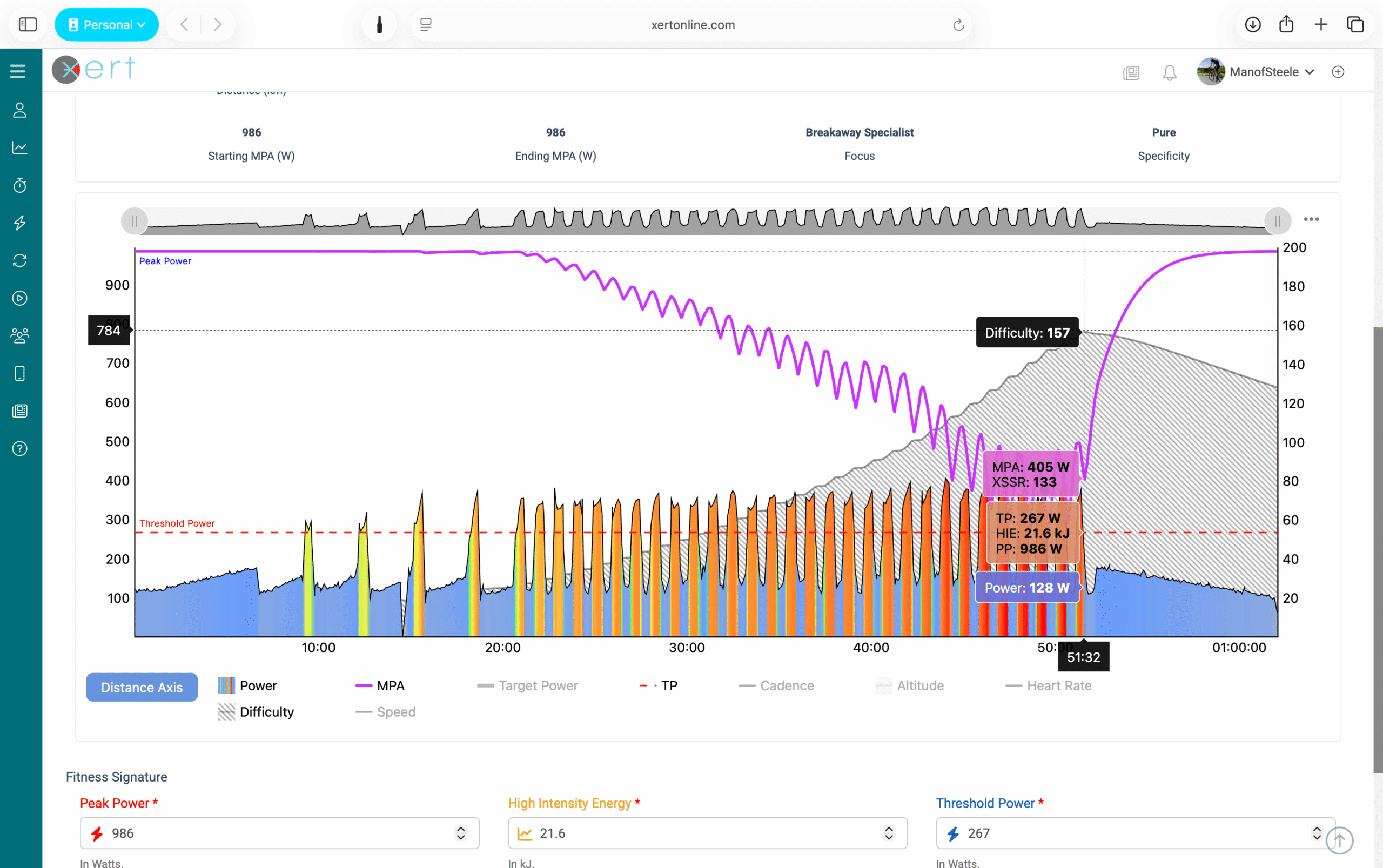
Hard intervals performed repeatedly to failure, such as those in the SMART – Test Your Might workout can increase Difficulty Score rapidly:
Where You’ll See It
- Difficulty score is shown by default as the hatched background line in all your MPA charts
- Difficulty Rating is shown on recommended workouts & completed activities
- Xert also uses the generic naming formula for free rides uploaded to Xert: Difficulty Rating - Specificity - Focus Type
Common Misunderstandings
- Difficulty Score is not based on average power or weighted power. It reflects how strain accumulates from repeated and sustained high-intensity efforts.
- Difficulty Score is driven by intensity, not duration. Long endurance rides may accumulate a large XSS total but still register as only Moderate in difficulty if they lack harder efforts.
- If your Difficulty Score exceeds 200, your Fitness Signature may be underestimated, and it may be time to pursue a Breakthrough.
Comments
0 comments
Please sign in to leave a comment.